
With the nationwide nursing shortage, nursing is ripe with job opportunities. Texas, in particular, has a significant shortage of nurses. Why are nurses in demand? The causes of the nursing shortage include the aging population and its increased healthcare needs, and the anticipated turnover of the nursing workforce.
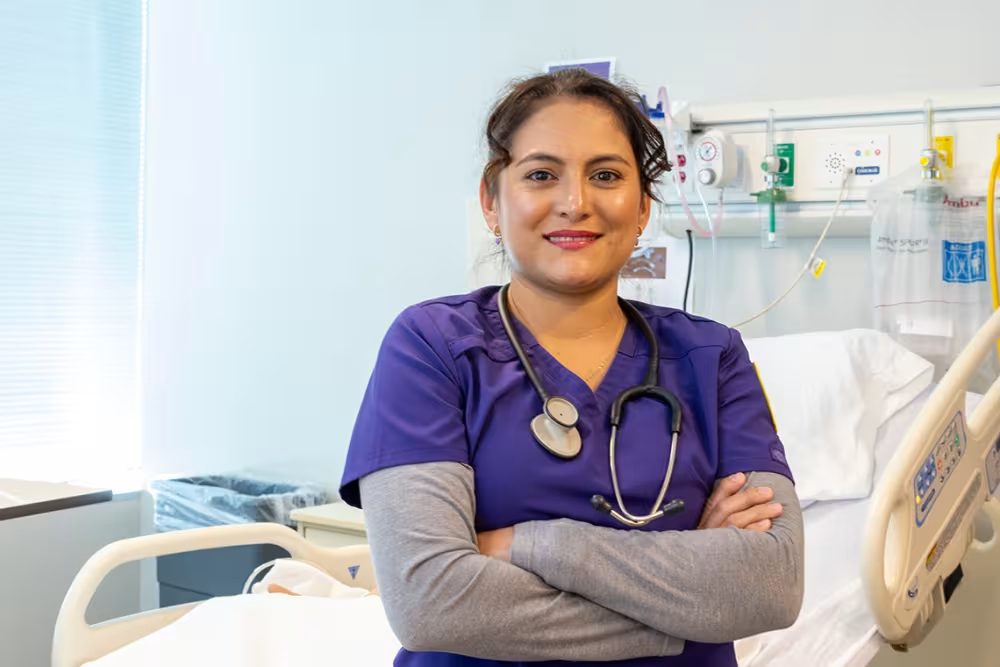
Are nurses in demand? Yes. Nursing offers considerable job stability because healthcare is a necessity, not a luxury. The U.S. is also experiencing an ongoing nursing shortage that is unlikely to resolve in the foreseeable future. Are nurses in high demand in your state? Nurses are needed nationwide.
High demand for registered nurses (RNs) makes now an opportune time to enter the profession. Concordia University Texas’s Accelerated Bachelor of Science in Nursing (ABSN) track can help you join the workforce sooner. With two nursing satellite campuses in Texas and three start dates each year, the ABSN track can enroll more students. After completing any needed prerequisites, students can graduate with a Bachelor of Science in Nursing (BSN) in as few as 16 months.
Before applying to nursing school, consider the question, “Are RNs in demand?” Understanding the RN job outlook can help you plan your career path.
Nursing Career Outlook and Future Demand for Nurses
Registered nurses make up one of the largest segments of the U.S. workforce, according to the American Association of Colleges of Nursing (AACN). There are more RNs than any other type of healthcare provider, and they deliver most hospital and long-term care. Even so, the supply remains insufficient. Are nurses in demand? Yes, and demand is expected to continue.
National Employment Projections
According to the U.S. Bureau of Labor Statistics (BLS), employment of RNs is projected to grow 5% from 2024 to 2034, faster than the average for all occupations. About 189,100 RN openings are projected each year, including openings created when nurses retire or otherwise leave the workforce.

Learn how getting a multi-state compact license in Texas can save you time and money when working as a nurse across state borders.
Nursing Specialties in High Demand
Although nurses are needed across specialties, demand is especially strong in certain areas. High-demand specialties include:
- Critical care nurses
- Emergency nurses
- Geriatric or gerontological nurses
- Long-term care nurses
- Medical-surgical nursing
- Nurse educators
- Oncology nurses
The U.S. BLS expects surgery centers, oncology treatment centers, rehabilitation facilities, hospitals, and residential care facilities to create many new RN openings.
Are Nurses in High Demand in Texas?
Nurses are in particularly high demand in Texas. Although the shortage affects the entire country, workforce needs vary by state.
Texas Nursing Shortage Statistics
According to the U.S. Health Resources and Services Administration (HRSA), in 2026, Texas has a nursing workforce that includes 239,030 RNs. The state needs 253,610 RNs, leaving a deficit of 14,580 RNs.
By 2038, the HRSA projects that Texas will have 286,210 RNs but will need 307,520, leaving a deficit of 21,310. The state’s projected shortage indicates a growing demand for nurses in the future.
The projected shortage makes this an opportune time to pursue a nursing career in Texas. Eligible Texas nurses may also obtain a multistate nursing license.

What Is Driving the Demand for Nurses?
Several factors are expected to sustain nursing demand over time.
An Aging Population and Growing Healthcare Needs
One major reason for the demand for nurses is the aging U.S. population. Baby boomers born between 1946 and 1964 are aging, and older adults typically require more healthcare services. They are also more likely to have serious acute conditions, such as heart attacks and strokes, and chronic diseases, including diabetes and high blood pressure.
The rising prevalence of chronic health conditions among people of all ages also contributes to the demand for nurses. These conditions include cancer, diabetes, heart disease, and obesity. About six in 10 Americans have at least one chronic health condition.
Nurse Retirements and Workforce Shortages
For the nursing profession, the aging baby boomer population creates a twofold challenge. Older Americans require more healthcare but also comprise a sizable share of the nursing workforce.
Since 2010, about 10,000 baby boomers per day have reached retirement age, and by 2030, all boomers will be at least 65. Among RNs, the median age is 50, and about 40% have said they intend to retire soon, according to the AACN. Their retirement would reduce the workforce and result in the loss of substantial experience, underscoring the need for new nurses.
Burnout and Nursing Education Challenges
When demand for nurses exceeds supply, understaffing can increase workplace stress and the risk of professional burnout, which can contribute to further turnover.
Nursing education presents another challenge. Schools have struggled to keep pace with demand for new nurses. Because nursing education requires time-intensive, hands-on instruction in labs and clinical settings, expanding class sizes can be difficult.
According to the AACN, 92,672 qualified nursing school applicants were turned away in 2025 because of shortages of faculty, clinical sites, classroom space, and clinical preceptors. These constraints limit nursing schools’ capacity to meet the demand in nursing.
ABSN programs, including Concordia Texas’s ABSN track, can help address this gap. With a nursing satellite campus in Dallas-Fort Worth and Austin, Texas, and three start dates each year, Concordia Texas can enroll more students and prepare more nursing graduates.

Discover why self-care for nurses is important and explore how you can prevent professional burnout.
How High Nursing Demand Benefits Future Nurses
How does the RN job outlook benefit nurses? Continuing demand for nurses supports job stability and long-term career growth.
Strong Job Stability
Healthcare settings need RNs to assess, treat, and educate patients. As a result, nursing offers job stability across many specialties and locations, including Texas and other states.
Long-Term Career Growth and Flexibility
Strong demand for nurses in the future may provide greater career flexibility, including access to roles with different schedules and opportunities in various locations.
RNs may also transition to another specialty or pursue advancement. Opportunities exist in bedside care and nonclinical areas, including nursing management, administration, and education.

Help Meet the Demand for Nurses Through Concordia University Texas’s ABSN Track
The nursing demand makes this an opportune time to pursue nursing, and Concordia Texas can help you begin. If you hold a non-nursing bachelor’s degree or at least 60 college credits, you may be eligible to apply to the ABSN track. Academic Success Coaches provide personalized guidance throughout the supported academic experience.
Choose between nursing satellite campuses in Austin and Dallas-Fort Worth, Texas, and three annual start dates. Request info today and connect with an admissions counselor to get started.