
Patient safety in nursing is critical, as medical errors are a leading cause of patient harm. Common types of errors include medication errors, hospital-acquired infections, and falls. Nurses can promote better safety in healthcare by following all safety protocols, fostering a culture of safety, and being accountable for mistakes.

Patient safety is a critically important issue that every current and future nurse must prioritize. Studies have shown that about 400,000 patients are harmed, while more than 200,000 die, each year due to preventable medical errors, according to an article on medical error reduction and prevention.
At Concordia University Texas, the Accelerated Bachelor of Science in Nursing (ABSN) track emphasizes nursing and patient safety, preparing students for their future careers. In addition to online coursework, you’ll complete nursing skills and simulation labs, where you will learn to deliver patient care and stay attentive to every detail. You’ll also gain hands-on clinical experience with our nearby clinical partners.
Explore the importance of patient safety in nursing, the common risks to patients, and how you can use your education and training to reduce the risk of medical errors.
Why Patient Safety Matters in Nursing Practice
As a nurse, the patients under your care are your top priority. It’s your responsibility to provide care that promotes their health and safety and aligns with their treatment plan and personal preferences. Nurses must be on constant lookout for potential issues that could harm their patients if unaddressed. For example, if one of your patients is experiencing dizziness, you may determine that they will need assistance getting out of bed and managing activities of daily living (ADLs).
Promoting patient safety is crucial to preventing medical errors that can harm patients. It also creates a healthcare environment that supports patients’ needs and enables them to achieve optimal recovery.
The Nurse’s Role in Promoting Safety in Healthcare
Nursing and patient safety go hand-in-hand. Nurses must frequently monitor their patients and pay close attention to detail to detect potential problems as early as possible. Nurses serve as patient advocates and educators, ensuring that patients’ concerns are heard and needs are met. By prioritizing safety in healthcare and following safety protocols, nurses can protect their patients and promote wellness.

Take a closer look at the roles of a registered nurse.
Common Risks to Patient Safety in Clinical Settings
All nurses should be aware of the many risks to patient safety. In clinical settings, watch out for the following issues:
Medication Errors
Nurses need to check and double-check every medication before administering it. Ensure that you are:
- Administering the right medication
- Giving the drug to the right patient
- Providing the right dose at the right time
- Not administering a medication that is harmful or contraindicated for the patient. For example, the patient might be allergic to the medication, or the medication is high-risk due to a preexisting condition.
Physicians may sometimes make errors in medication orders. If something seems odd to you, such as a medication prescribed despite contraindications, verify the order before administering it.
Hospital-Acquired Infections (HAIs)
Hospital-acquired infections are all too common. They may affect patients who are still hospitalized or develop shortly after discharge. Some examples of HAIs include:
- Central line-associated bloodstream infections
- Catheter-associated urinary tract infections
- Ventilator-associated pneumonia
- Surgical site infections
Falls
Not all patients want to ask for help every time they need it; some may try to get out of bed on their own when they shouldn’t. Others may overestimate their strength or underestimate the severity of their medical condition. While nurses need to identify which patients are at high risk of falling, it’s best to assume that every patient has the potential to suffer a fall-related injury.
Documentation Errors
Documentation errors, such as insufficient charting, are common nursing errors that can lead to patient harm. Nurses need to chart the patient’s conditions, treatments, changes in health status, and all other information pertaining to the patient or their care.
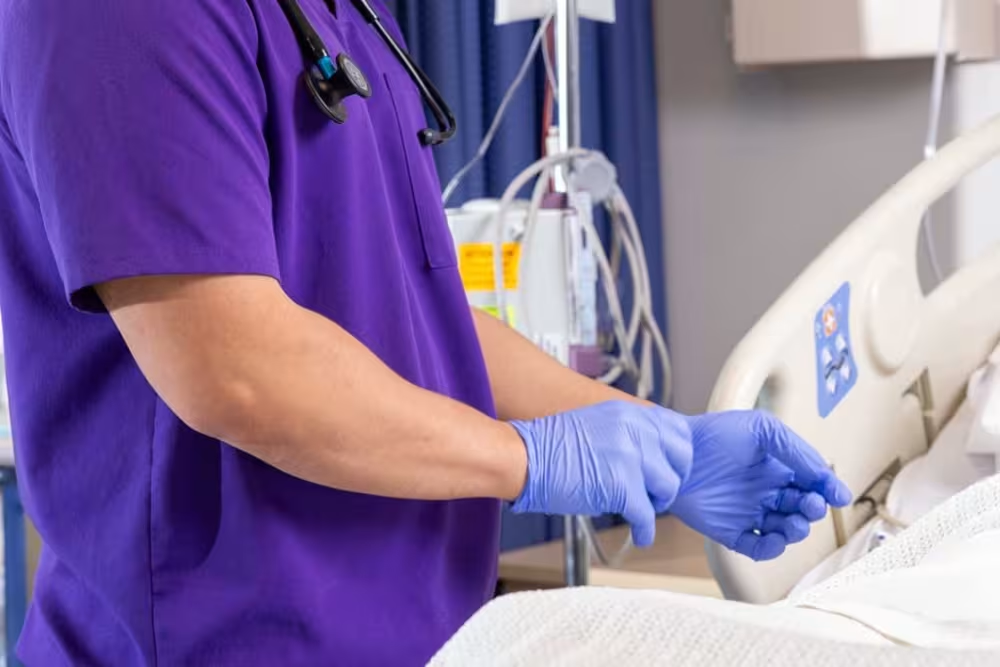
Strategies Nurses Use to Improve Patient Safety
Patient safety in nursing is a complex topic that spans many different nursing activities. Throughout each shift, make safety a top priority. Some actionable strategies to follow include:
Medication Safety
Nurses can promote medication safety and reduce the risk of medication errors by following the “five rights.” These are:
- The right patient
- The right drug
- The right dose
- The right route
- The right time
It’s important to double-check everything, from the name of the drug to the method of administration to the time of the dosage. Nurses can also go the extra mile to quickly review the patient’s medical history and identify whether a medication might be contraindicated.
Infection Control
Every patient, whether in inpatient or outpatient settings, has the potential to acquire an infection in the nursing environment. Nurses can limit this risk by:
- Following safety protocols during catheter insertion and injections
- Staying current on all immunizations
- Staying home when ill
- Using appropriate personal protective equipment (PPE), such as N95 masks
- Washing their hands thoroughly and frequently
Fall Prevention
Fall prevention can be addressed through a combination of vigilance and technology. Nurses need to:
- Assess patients and identify those who are at high risk for falls
- Closely monitor high-risk patients and explain to them why they shouldn’t try to get out of bed by themselves
- Use all available fall prevention technology, such as smart beds that sound alerts when a high-risk patient gets out of bed
- Keep patient rooms clear of tripping and falling hazards
- Use assistive equipment for patient transferring
How Education and Training Strengthen Patient Safety
Your nursing education will teach you how to identify red flags and respond accordingly. At Concordia University Texas, the curriculum also fosters a strong understanding of medical error prevention and patient safety promotion, while encouraging students to create a culture driven by continual quality improvements.
During your nursing education in the ABSN track, you’ll work on the following to promote patient safety in nursing:
- Critical thinking, analytical reasoning, and decision-making skills, which enable you to identify problems and develop an appropriate nursing response
- Teamwork and communication skills, which promote effective collaboration to prevent misunderstandings
- Patient and family engagement, which empowers your patients to speak up when they have concerns
- Safety protocols concerning infection control and medication safety

How does clinical experience improve patient care?
Building a Culture of Safety in Nursing Environments
Nurse leaders, such as charge nurses and nurse managers, play a significant role in establishing a culture of safety in hospitals and other nursing environments; however, every nurse contributes to their workplace culture and can help foster a patient safety-minded community.
The creation of a culture of safety in healthcare starts by understanding and adhering to guidelines and protocols established by professional nursing organizations and official bodies, as well as the hospital’s own safety protocols and procedures. Nurses can also:
- Keep up with the latest nursing research and use evidence-based practices.
- Be proactive about identifying and addressing safety issues.
- Report potential problems promptly.
- Be accountable for mistakes, report them, and address them immediately.
Learn to Provide Excellent Care at Concordia University Texas
Since 1926, Concordia University Texas has delivered a values-based education that prepares students to serve as competent, ethical healthcare providers who uphold the dignity of all, with an emphasis on patient safety and quality of care.
If you have a non-nursing bachelor’s degree or at least 60 college credits, you may be eligible for the ABSN track in Dallas or Austin, Texas. The accelerated track offers personalized support and quality nursing education, allowing you to graduate in as few as 16 months.
Contact an admissions counselor today to get started.